

The Tea App Checker takes this curiosity a step further. It is commonly used to describe the search and safety features available through Tea, a dating-advice platform where women can look for information about men they may be dating, considering dating, or simply chatting with.
The idea sounds straightforward: search for a person, see whether other users have shared experiences, and use that information to make a more informed decision. In practice, however, it is more complicated. Questions about accuracy, privacy, impersonation, outdated information, and anonymous claims quickly enter the conversation.
So, is the Tea App Checker a useful dating-safety tool, an unreliable rumor board, or something in between? Let’s take a closer look.
What Is the Tea App Checker?
The Tea App Checker is not necessarily a separate official product with that exact name. People commonly use the phrase when talking about checking someone through the Tea dating-advice platform.
Tea was created as a women-focused space for discussing dating experiences and identifying possible warning signs. Depending on the version of the platform and the features available in a user’s region, the platform may allow users to search for names, view community posts, request advice, follow discussions, and use dating-safety tools.
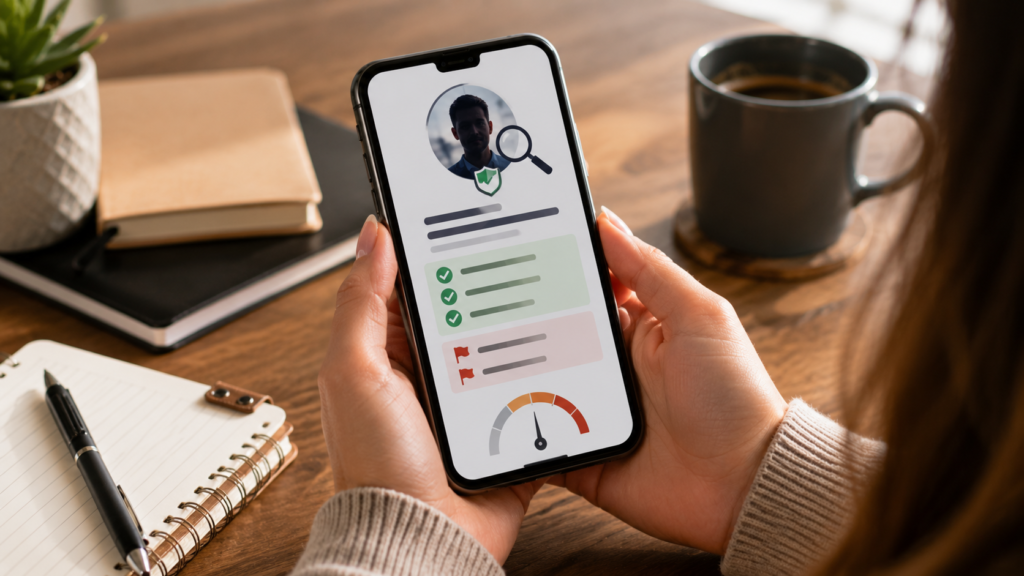
A typical user might open the platform before meeting someone from a dating app and search for his name or photo. If another member has previously posted about that person, relevant information may appear.
Some discussions may be harmless, such as:
- Whether the person is genuinely single
- Whether profile photos appear authentic
- Whether someone has been using different names
- Whether multiple women are dating the same person
- Whether past dates noticed concerning behavior
- Whether someone repeatedly cancels or disappears
- Whether there are potential safety concerns
The concept is basically community-powered dating research. It is a digital version of asking a friend, “Do you know anything about this guy?” The difference is that the “friend” may be a large group of strangers on the internet.
That last detail matters quite a bit.
Why Has the Tea App Checker Become Popular?
Dating apps make meeting people easier, but they do not automatically make dating safer. A polished profile can hide a surprising amount of information.
Someone can use old photos, change their age, hide an existing relationship, or create an entirely fictional identity. Even without deliberately lying, people tend to present the most flattering version of themselves online. Nobody writes “poor communicator with a mysterious habit of vanishing every weekend” in a dating bio.
The Tea App Checker appeals to users because it offers another layer of information before they decide whether to meet someone.
It is especially attractive to people who have experienced:
- Catfishing
- Romance scams
- Cheating
- Harassment
- Stalking
- Dishonest relationship claims
- Fake names or photographs
- Repeatedly unsafe dating situations
For many women, the platform feels like a private support network. Users can compare experiences, ask questions, and potentially notice patterns that would be difficult for one person to discover alone.
If several unrelated people report nearly identical behavior, that pattern may be worth taking seriously. At the same time, repeated claims are still not the same as independently verified evidence.
How Does a Tea App Check Usually Work?
The exact process may change as the service updates its website, mobile app, verification rules, or available features. In general, a Tea app check follows a few basic steps.
1. Accessing the Platform
A user first creates or signs into an eligible Tea account. The service has traditionally been designed as a women-only community, and some form of user verification may be required.
You should always access the platform through its official website or legitimate app listing. Avoid unofficial “Tea lookup” websites that promise instant results. Some may simply collect names, photos, email addresses, or payment information without providing a real service.
2. Searching for a Person
Once inside, the user may search using details such as a first name, last name, location, age range, or photograph, depending on the currently available tools.
Common names can make this difficult. Searching for “Michael in Los Angeles,” for example, is unlikely to feel like precision detective work. You may need several matching details before assuming that a result refers to the correct person.
3. Reviewing Community Information
If results appear, the user can read posts or comments associated with that person. These may include positive experiences, neutral questions, or warnings.
The important word here is “associated.” A similar name, age, or photograph does not guarantee that the information belongs to the person you are checking.
4. Comparing Identifying Details
Before concluding, compare multiple non-sensitive details:
- General location
- Approximate age
- Dating-app profile photos
- Occupation, if publicly shared
- Distinctive profile information
- Timeline of the reported interaction
Do not repost private addresses, phone numbers, workplace schedules, identification documents, or other sensitive details. Dating safety should not turn into doxing.
5. Deciding What to Do Next
A Tea app result should inform your judgment, not replace it. If the information raises a reasonable concern, you can slow down, ask direct questions, arrange a safer meeting, or cancel the date.
You do not owe anyone a meeting simply because their explanation sounds convincing. You also should not publicly accuse someone based solely on one anonymous post.
Can You Check Whether You Are on the Tea App?
This is one of the most common questions surrounding the Tea App Checker.
People often want to know whether their own photo or name has been posted. The honest answer is that there may not be a simple, official public search box that lets anyone check the entire Tea database from outside the platform.
The service is designed around restricted community access rather than unrestricted public searches. Therefore, websites claiming they can instantly show “who posted you on Tea” should be approached carefully.
Some unofficial checker sites may ask for:
- Your full legal name
- Your telephone number
- Your email address
- A clear photograph
- Social media account access
- Payment-card information
Providing all of that personal data to an unknown website can create a bigger privacy problem than the one you were trying to investigate.
If you genuinely believe your information has been posted without permission, use the platform’s official reporting, privacy, or support process. Keep records of your communication, including dates, screenshots, and reference numbers where available.
Is the Tea App Checker Accurate?
It can provide useful clues, but it should not be treated as a flawless background-check system.
Community reports are created by individual users. Some may describe real experiences accurately and in good faith. Others may contain misunderstandings, emotional interpretations, incomplete stories, outdated details, or false accusations.
A person may also be confused with someone who has the same name or a similar appearance.
Think of Tea app results as leads rather than verdicts. They can tell you where to look more carefully, but they do not automatically prove what happened.
Look for Specific, Consistent Information
A detailed description with a clear timeline is generally more useful than a vague statement such as “bad vibes” or “avoid him.”
Specific information can still be false, of course, but it gives you something concrete to evaluate.
Check Whether Multiple Reports Are Independent
Several posts repeating the same story may look convincing. However, the users might be repeating information from one original claim rather than describing separate experiences.
Look for independent details and different timelines.
Consider the Date of the Information
An old post may no longer reflect someone’s current situation. People change jobs, move cities, end relationships, and sometimes learn from their mistakes.
Some conduct remains serious regardless of age, but context and timing still matter.
Watch for Mistaken Identity
Similar names and photographs can lead to incorrect matches. This risk increases when the person has a common name or lives in a large city.
Never assume a match based on a first name and a blurry dating-profile picture.
Privacy and Security Concerns
The Tea platform has faced serious public scrutiny over privacy and data security. A widely reported breach in 2025 exposed tens of thousands of images, including some selfies and identification images connected with older verification practices. Additional reporting also raised concerns about private messages and sensitive conversations.
The company later promoted changes to its security approach and returned to a web-based platform, but the incident remains an important lesson: information shared with a safety-focused app can still become vulnerable.
Before uploading anything, assume there is always some risk that it could be copied, screenshotted, leaked, or shared beyond its intended audience.
A privacy-conscious user should avoid posting:
- Home addresses
- Personal phone numbers
- Government identification
- Financial information
- Exact workplace schedules
- Private medical information
- Intimate images
- Information about children
- Unverified criminal allegations
Even when you believe a warning is necessary, share the minimum information required to explain the concern.
How to Use the Tea App Checker Responsibly
The usefulness of a community safety platform depends heavily on how people use it.
Focus on Safety, Not Entertainment
There is a meaningful difference between warning others about threatening behavior and mocking someone’s appearance, income, clothing, or awkward conversation.
Not every disappointing date is a public-safety issue. Sometimes two people simply do not connect. That may be frustrating, but it does not automatically make either person dangerous.
Separate Facts From Opinions
Try to distinguish between what happened and how it made you feel.
For example, “He arrived 45 minutes late and did not message me” is an observable claim. “He is definitely a terrible person” is a conclusion.
Clear facts help other users make their own decisions.
Avoid Publishing Sensitive Personal Data
Do not share someone’s address, phone number, identification number, family information, or live location. Posting such details can create physical and digital safety risks.
Correct Mistakes Promptly
If you discover that you identified the wrong person or misunderstood something important, update or remove the post as quickly as possible.
A false claim can spread much faster than a correction.
Do Not Use the Platform for Revenge
Anonymous posting can make it tempting to retaliate after an argument or breakup. That is not responsible use, and false statements may carry serious personal or legal consequences.
Tea App Checker Versus a Formal Background Check
The Tea App Checker and a professional background check are not the same thing.
A formal background-check service may search public records, court information, identity data, or other documented sources. Tea primarily adds community experiences and social context.
Each has limitations.
Public records can be outdated, incomplete, or attached to the wrong person. Community posts may be subjective or unverified. Even a completely clean result does not guarantee that someone is trustworthy.
For better dating safety, combine several sensible methods:
- Confirm that profile photos appear genuine
- Arrange a brief video call
- Meet in a busy public place
- Tell a trusted friend where you are going
- Use your own transportation
- Keep your phone charged
- Avoid sharing your home address immediately
- Pay attention to pressure, inconsistency, or controlling behavior
No checker can replace practical precautions.
Red Flags a Checker May Help You Notice
A Tea app search may reveal patterns that deserve attention, including:
- Different names used with different people
- Conflicting claims about relationship status
- Reused or stolen photographs
- Repeated requests for money
- Aggressive behavior after rejection
- Attempts to isolate dates from friends
- Multiple reports of harassment
- Pressure to meet privately
- Inconsistent age or employment details
- A pattern of disappearing and returning with dramatic excuses
One unusual detail does not always mean danger. Several consistent warning signs, however, should not be ignored.
Your instincts matter too. If something feels wrong, you are allowed to step back without building a courtroom-level case first.
What If Nothing Appears in the Search?
A blank result is not proof that someone is safe, honest, or single. It simply means you did not find relevant information.
The person may never have been posted. They might be listed under a nickname, another spelling, an old photograph, or a different city. The platform may also have limited coverage in your location.
Treat “no results” as neutral information.
Continue using normal dating precautions. A clean search should not persuade you to ignore suspicious behavior that you witness directly.
What If You Find a Concerning Post?
First, pause before reacting. Confirm that the post appears to describe the correct person and read the full context if available.
If the report involves minor dishonesty or unclear behavior, you might ask the person a calm, direct question without exposing the identity of the poster.
If it describes violence, stalking, coercion, threats, or another serious safety risk, prioritize your own security. Avoid meeting privately, inform someone you trust, save relevant evidence, and seek appropriate professional or emergency assistance when necessary.
Do not confront a potentially dangerous person alone simply to prove that you know something.
The Balanced View
The Tea App Checker represents a genuine need in modern dating. People want better ways to identify fake profiles, hidden relationships, scammers, and potentially dangerous behavior.
Community knowledge can sometimes expose patterns that individual data would never see. That is the strongest argument in favor of platforms like Tea.
The weakness is equally clear: anonymous information can be inaccurate, invasive, outdated, or deliberately misleading. A tool created for protection can cause harm if users abandon fairness and basic privacy.
The best approach is neither blind trust nor automatic dismissal. Read carefully, verify what you can, protect sensitive information, and use the results as one part of a broader safety decision.
Frequently Asked Questions
What is the Tea App Checker used for?
It is commonly used to describe searching the Tea dating-advice platform for community information about a potential date. Users may look for identity concerns, dating patterns, possible red flags, or experiences shared by others.
Is the Tea App Checker free?
Access and features may vary by platform, location, and subscription level. Some functions may be available without payment, while advanced tools may require a paid plan.
Can men use the Tea App Checker?
Tea has traditionally positioned itself as a women-focused and verified community. Eligibility and verification requirements may change, so users should review the platform’s current official policies.
Can I find out who posted me on Tea?
Anonymous community platforms generally do not publicly reveal a poster’s identity. If a post violates privacy rules or contains false information, use the official reporting or support process instead of attempting to identify or harass the author.
Is every Tea app post true?
No. Posts are user-generated and may contain honest experiences, opinions, misunderstandings, outdated details, or false claims. Always check identifying information and seek additional context.
Does no result mean the person is safe?
No. It only means that your search did not produce relevant information. Continue following normal online-dating safety practices.
Is it safe to use unofficial T-checker websites?
Be cautious. Avoid services requesting excessive personal information, social media passwords, identification documents, or suspicious payments. Use official Tea channels whenever possible.
Can someone remove false information from Tea?
A person may be able to report false content, harassment, privacy issues, orviolations oft platform rules. Save evidence and submit a clear request through the official support or privacy process.
Is Tea a replacement for a background check?
No. Tea provides community-sourced information, while formal background checks generally examine documented records. Neither method is perfect, and both should be combined with common-sense safety measures.
Conclusion
The Tea App Checker is best understood as an additional dating-safety resource, not a digital truth machine. It may help users discover inconsistent identities, repeated behavior, or serious warnings before meeting someone. That potential can be genuinely valuable.
At the same time, anonymous posts require careful judgment. Misidentification, rumors, old information, and personal grudges can distort the picture. Privacy concerns also deserve attention, especially when photographs and sensitive personal details are involved.
Use the Tea App Checker thoughtfully. Verify details, avoid spreading private information, and never let a search result completely replace your own observations. Online dating will probably always involve a bit of detective work, but the goal should be safer decisions, not a full-time career in internet investigation.
5.6 SolLight5.6 SolMedium5.6 SolHigh5.6 SolExtra High5.6 SolMax5.6 TerraLight5.6 TerraMedium5.6 TerraHigh5.6 TerraExtra High5.6 TerraMax5.6 LunaLight5.6 LunaMedium5.6 LunaHigh5.6 LunaExtra High5.6 LunaMax5.5Light5.5Medium5.5High5.5Extra High5.6 TerraLight5.6 SolLight5.6 SolMedium5.6 SolHigh5.6 SolExtra High
